|
Client Pre-Qualifications
The best candidate for laser hair removal has fair skin with dark terminal
(post pubescent) hairs. Skin typing for exposure to ultraviolet light can be categorized by the Fitzpatrick classification, developed by Dr. Thomas Fitzpatrick of Harvard Medical School.
-
Skin Type I:
Never tans, always burns
(extremely fair skin, blonde
hair, blue/green eyes)
-
Skin Type II:
Occasionally tans, usually
burns (fair skin, sandy to
brown hair, green/brown
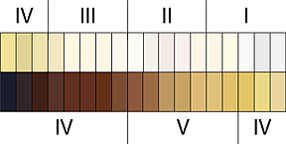 eyes) eyes)
-
Skin Type III: Often tans, sometimes burns (medium skin, brown hair, brown eyes)
-
Skin Type IV: Always tan, never burns (olive skin, brown/black hair, dark brown/black eyes)
-
Skin Type V:
Never burns (dark brown skin,
black hair, black eyes
-
Skin Type VI: (black skin, black hair, black eyes)
Types 1
through 4 are outstanding
candidates. Type 5 will have
excellent results as well but
care must be taken to assure
that the laser or IPL will not
burn the skin. This can
be achieved with aggressive
skin bleaching.
High Output Professional
Laser System
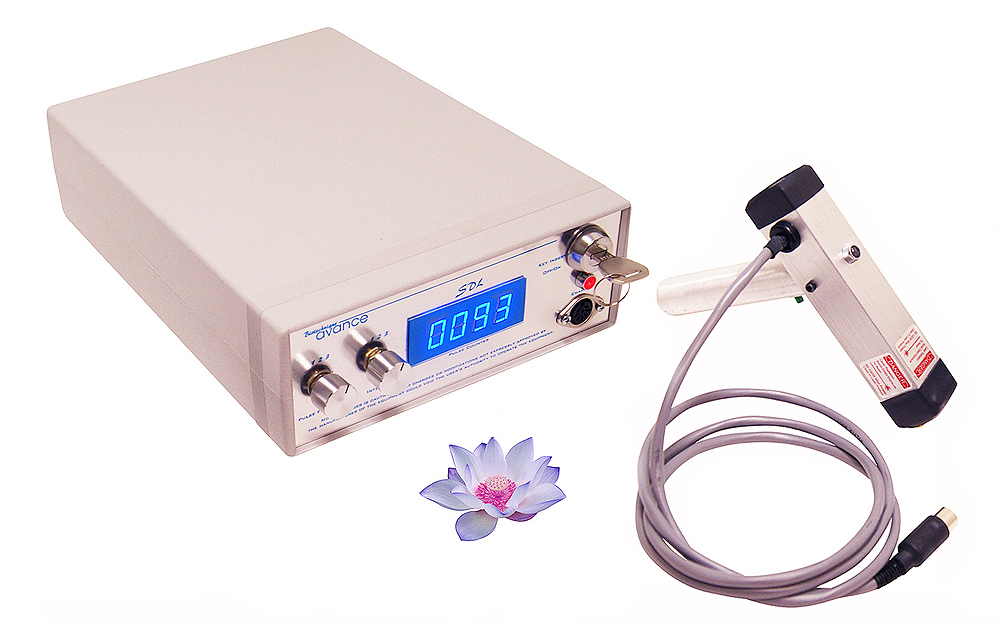
The SDL-80 is a proven commodity in the industry of laser
cosmetology.
Maximum power output is
220 joules per cm2/second (31.43 joules per pulse) 80,000mW QCW
long pulse diode, 800-810nm.
The SDL80 has a very efficient 20mm wide beam with a pulse
duration of 70ms.
^Pulse frequency is user adjustable up to 7 emissions per
second.
Reduces unwanted hair, veins,
tattoos, wrinkles, scars and more.
Rebuilds skin tone & texture for a radiant youthful
appearance.

Approved
For:
Permanent Hair Reduction,
Varicose Vein Reduction, Skin Toning, Body Sculpting, Photo
Rejuvenation, Hyper Pigment - Age Spot Removal, Wrinkle
Reduction, Tattoo Reduction, Scar - Stretch Mark Reduction,
Psoriasis, Rosacea, Sun Damage, Blemish (mole, wart, skin
tag) Removal, Nail Fungus Treatment and More.
^These
treatment options are covered in literature sent with the
system.
Powerful,
Versatile, and Affordable Laser Technology
The SDL80 Universal Kit Comes With:
Professional Diode Laser Hand
Piece 220jcm2 energy density
(fluence), key lockout safety
switch, laser 'enabled' system
 status
LED, adjustable intensity, 2
pair of laser protection
eyewear,
50ml carbon dye gel, 100ml of
3% pre-treatment
gel, 50ml of post treatment
gel, tweezers, and instructions. status
LED, adjustable intensity, 2
pair of laser protection
eyewear,
50ml carbon dye gel, 100ml of
3% pre-treatment
gel, 50ml of post treatment
gel, tweezers, and instructions.
The
Standard Output Diode Laser
System has a very comfortable
and versatile hand piece. A
powerful 5cfm positive
displacement micro-fan keeps
the semiconductor cool during
usage, which increases the
power, performance, and overall
life-expectancy of the laser.
Available in the Standard
Universal Kit
for
$1,649.90
Accessory Kit
-
Model:
SDL80.
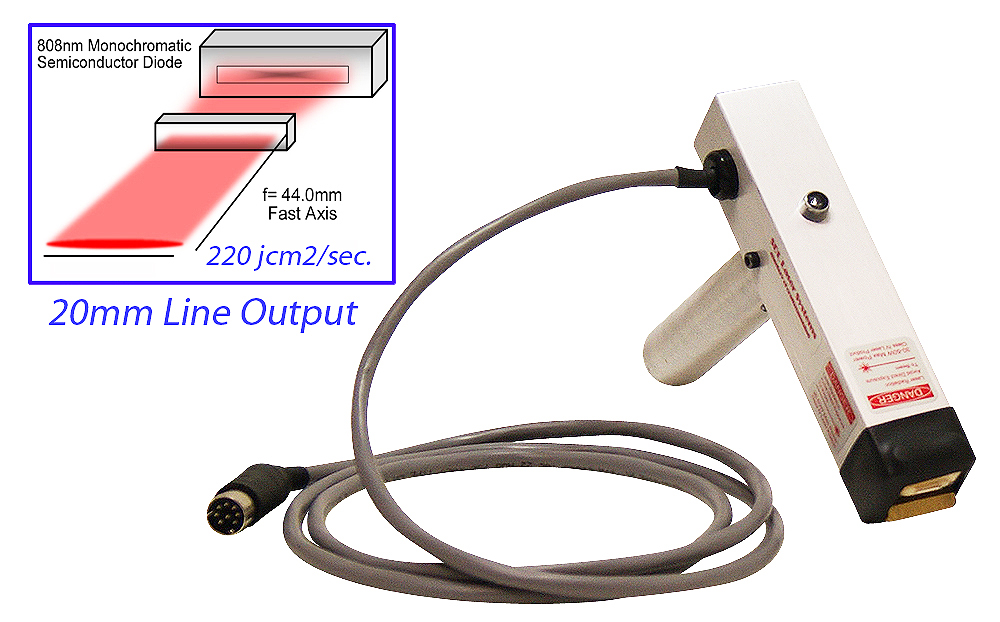
Energy Density (fluence): 220 jcm2/sec.
maximum (22-30 jcm2/pulse).
-
Features:
Adjustable Intensity, Portable.
Product Classification:
Laser Skin Care
System.
-
Pulse Frequency: User
adjustable
from 1, 3, 7 pulses/second.
-
Pulse
Duration: Factory
Preset 70ms.
-
Beam
Size and Shape: 20 mm
line optics
-
Treatment Time for
Moustache: 3 minutes.
-
 Approved
Skin Types:
All. Approved
Skin Types:
All. -
PDF Instructions:
Link.
-
Brand: Avance
Beauty.
-
Video Instructions:
Download.
-
Topical Acc. Data
Sheets:
1,
2,
3.
-
Color: Beige.
MPN:
SDL80-UV.
-
Certificate of
Conformity: FCC, CDRH, CE.
-
Country/Region of Manufacture: United
States.
-
Power Source:
Corded Electric 110-240V.
-
Controller Size:
6" H x 8" W x12" L (13cm x 18cm x 25cm).
Weight: 7lbs (3kg).
UPC: 723503061421.
90 Day
Unconditional Money-Back
Guarantee
Warranty
Information:
To the original
purchaser, the above
item will arrive
without damage or
defect in material
or workmanship.
Should your system
arrive damaged or in
otherwise
incomplete/unacceptable
condition please
refer to the
warranty repair card
in your instruction
packet to expedite
the return. This
warranty is valid
for 12 calendar
months from the date
of purchase.
^Additional
years may be
purchased for $9.95
each up to 5 years.
Refer to the
warranty
registration card
included with your
packet for more
information.
 Guaranteed
Utility Compatibility.
110-240 Volts.
All kits are sent
with corresponding
input voltage, hertz
and plug style for
the country of
destination.
If you have special
requirements, please
note them in the
checkout section of
your purchase.
Legal Disclaimer:
Images on this page
are for example
purposes only and do
not necessarily
reflect results that
will be achieved on
all clients and
persons. Typical
results from laser,
IPL and electrolysis
treatments are
generally rated in terms of improvement and
not cure. This
equipment is not
intended to
diagnose, treat or
cure any disease.
|

